

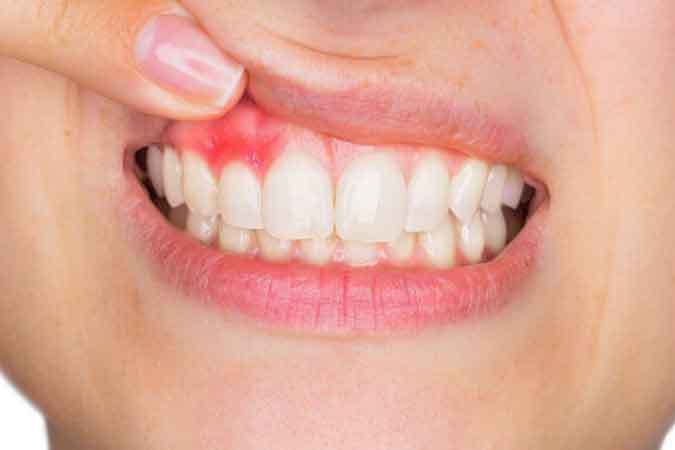
You have a missing tooth and you’ve been told you have three options: a dental implant, a fixed bridge, or a removable partial denture. This 2026 Brooklyn decision guide compares all three honestly on cost, longevity, comfort, suitability, and what your specific situation favors — because each option is genuinely the right answer for the right person.
Why replacing the tooth matters at all
A quick word on the option most people regret: doing nothing. When a tooth is missing, adjacent teeth tilt into the gap within months, the opposing tooth drifts looking for contact, and the underlying jawbone loses roughly 25% of its width in the first year. Within five years, a single-tooth problem often becomes a three-tooth problem.
So replacement is rarely optional — the question is which replacement. The American Dental Association’s overview of missing teeth emphasizes that the “best” option depends on your mouth, medical history, budget, and timeline. There is no universal winner.
The three options at a glance
All prices reflect 2026 Brooklyn fees at our Sheepshead Bay practice for a single missing tooth in a typical case (no major bone graft, no complications). Your actual case may vary, and we give written estimates after the exam.
| Feature | Dental Implant | 3-Unit Bridge | Partial Denture |
|---|---|---|---|
| Typical cost (single tooth) | $4,085 | $3,500–$4,500 | $1,495–$2,195 |
| Expected lifespan | 25+ years (often lifetime) | 10–15 years | 5–10 years |
| Total timeline start to finish | 4–9 months | 2–3 weeks | 4–6 weeks |
| Affects adjacent teeth | No — fully standalone | Yes — 2 healthy neighbors are ground down for crowns | No — clips around teeth without altering them |
| Effect on jawbone | Preserves bone (root replacement) | Bone loss continues under the false tooth | Bone loss continues underneath |
| Feel and function | Closest to a natural tooth | Fixed, feels natural, can’t be removed | Removable, takes weeks to adjust to |
| Daily maintenance | Brush and floss like a natural tooth (special floss helpful) | Special floss threaders or water flosser under the pontic | Remove and clean daily, soak overnight |
| Typical PPO insurance coverage | 30–50% (when “missing tooth clause” doesn’t block) | 50–60% | 50–80% |
| Surgery required | Yes — minor outpatient procedure | No | No |
That table tells you a lot, but it doesn’t tell you which option is right for you. The next sections explain each option and then walk through who each fits best.
Option 1: Dental implant — what it is and who it’s for
A dental implant is a three-part replacement that mimics a natural tooth. The titanium screw replaces the root, an abutment connects to the gum surface, and a porcelain or zirconia crown sits on top. Once it heals (a process called osseointegration, where bone grows around the titanium and locks it in place), it functions like a natural tooth and doesn’t depend on the neighbors for support.
Who it’s right for: Adults with one or more missing teeth, healthy gums, sufficient jawbone, and no uncontrolled medical conditions. Implants do best in non-smokers with controlled diabetes (A1C under 7) and no untreated periodontitis.
Who it’s not right for: Significant bone loss with refusal of grafting, uncontrolled diabetes, current chemotherapy or recent IV bisphosphonate treatment, heavy active smokers (failure rates roughly double), patients under 18, or anyone with untreated active gum disease.
2026 cost breakdown at our Sheepshead Bay office:
- Implant fixture (titanium post): $1,895
- Abutment (the connector): $695
- Crown (porcelain or zirconia): $1,495
- Single-tooth total: $4,085
- Bone graft if needed: $585–$985 additional
- Sinus lift (upper back teeth only, if needed): $895–$1,495 additional
- 3D CBCT scan for surgical planning: $345 (or included with full implant package)
The full process — from extraction (if needed) through healing, surgical placement, integration, abutment, and final crown — usually takes 4 to 9 months. We’ve published a pre-operative walkthrough in our Russian-language implant preparation guide, and the biology is covered in our osseointegration explainer. The full service overview lives on our dental implants page. The American Association of Oral and Maxillofacial Surgeons publishes patient education on dental implants showing a 95%+ ten-year success rate when patient selection is appropriate.
Honest pros: Doesn’t touch neighboring teeth, preserves jawbone, longest-lasting option, feels closest to a natural tooth.
Honest cons: Highest upfront cost, longest timeline, requires minor surgery, partial insurance coverage, dietary modification during integration.
Option 2: Fixed bridge — what it is and who it’s for
A traditional 3-unit bridge spans a gap. The two teeth on either side (called abutment teeth) are prepared by grinding them down to receive crowns. A lab fabricates a single connected unit: two crowns with a false tooth (a pontic) suspended between them, cemented in permanently. From outside it looks like three teeth, but it’s one piece.
Who it’s right for: Adults missing one or two teeth in a row with healthy adjacent teeth, no major bone loss, and a preference for a faster timeline. A bridge is genuinely the correct choice when adjacent teeth already need crowns anyway — large old fillings, cracks, or failing restorations. You’re getting crowns regardless, so adding a pontic between them is efficient and avoids surgery.
Who it’s not right for: Pristine untouched adjacent teeth (a shame to grind healthy enamel), spans of three or more missing teeth (mechanics get unfavorable), or anyone with a long-term view who can afford the implant.
2026 cost at our Brooklyn office:
- 3-unit porcelain-fused-to-metal (PFM) bridge: $3,500–$4,500
- 3-unit full zirconia bridge: $3,800–$4,800
- Maryland (resin-bonded) bridge for front teeth in select cases: $1,895–$2,495
The process takes two to three weeks: first visit for prep, impressions, and a temporary; second visit to try-in, adjust, and cement. Our dental crowns page covers crown materials in more depth — the same materials are used in bridge units.
Honest pros: Faster than implants (under a month), no surgery, well-covered by most PPO plans, looks natural, nothing removable.
Honest cons: Permanently alters two healthy teeth (irreversible), shorter lifespan, bone loss continues under the pontic, flossing under the false tooth needs special tools, and if one abutment fails years later you usually lose the whole bridge.
Option 3: Removable partial denture — what it is and who it’s for
A partial denture is a removable appliance with an acrylic base, a framework (metal or flexible nylon), and one or more false teeth attached. It clips onto your remaining teeth and is removed at night for cleaning. Modern partials are far more comfortable and aesthetic than what your grandparents wore — flexible Valplast-style partials avoid visible metal clasps entirely.
Who it’s right for: Adults with a limited budget, those missing multiple non-adjacent teeth at once, patients who can’t have surgery for medical reasons, and people wanting a temporary functional solution while saving for implants later.
Who it’s not right for: Adults wanting a permanent fixed feel, patients with very few remaining teeth to clasp onto (full denture or overdenture is better), or anyone who knows they won’t tolerate removing an appliance daily.
2026 cost at our practice:
- Acrylic partial denture: $1,495–$1,895
- Cast metal framework partial: $1,895–$2,295
- Flexible Valplast partial (no visible metal): $1,895–$2,495
Fabrication takes four to six weeks across several short visits: impressions, bite registration, wax try-in, delivery, and one or two adjustments. Our full overview lives on the dentures Brooklyn page, and we’ve published a Russian-language explainer on removable dental prosthetics for Russian-speaking patients.
Honest pros: Most affordable, no surgery, fastest path back to chewing for someone missing several teeth at once, easy to clean, easy to add to if you lose another tooth later.
Honest cons: Must be removed and cleaned daily, feels bulky at first, two to four weeks to adjust to speech and chewing, metal clasps sometimes visible (less so with Valplast), bone loss continues underneath, and requires a reline every few years as the ridge changes.
The decision matrix — what fits your situation
Below are the situations we see most often and what we typically recommend after a full exam. None of this replaces a clinical evaluation, but it’s a useful starting point.
Healthy mouth, one missing tooth, can afford it, want a lifetime solution: Implant. Best long-term value despite the higher upfront cost.
Adjacent teeth already need crowns (large old fillings, cracks, failed restorations): Bridge. You’re paying for crowns anyway — adding a pontic between them is efficient and avoids surgery.
Tight budget, need a functional replacement now: Partial denture. Can always be upgraded to an implant in a year or two when finances allow.
Three or more missing teeth in a row: Implants or an implant-supported bridge. A traditional bridge of that length is biomechanically risky.
Insufficient bone and unwilling to consider grafting: Bridge or denture. No bone, no implant — that’s a hard rule.
Age 70+, otherwise healthy and active: Implant is still very reasonable. We routinely place implants in patients in their 70s and 80s.
Age 70+ with multiple medical issues, blood thinners, controlled diabetes: Often a partial denture is the safer, lower-stress choice.
Pregnant or planning pregnancy: Wait until after delivery for any elective replacement. Address pain or infection now, restore later.
Insurance reality for tooth replacement in 2026
Coverage is the single most common reason patients change their minds between options. Here’s what we actually see at our Brooklyn practice across the 18 PPO plans we accept.
Implants: Most PPO plans now cover implants at 30–50% of the allowed fee, but with caveats. The “missing tooth clause” can deny coverage if the tooth was lost before your current policy started. Annual maximums (often $1,500–$2,000) get exhausted quickly. Our Brooklyn dental insurance guide breaks down which PPO plans cover implants best, and patients who speak Russian can review the Russian-language insurance guide.
Bridges: Better covered than implants by most plans — typically 50–60% of the allowed fee. The missing tooth clause sometimes applies here too. Some plans have an “alternate benefit” rule, where if you choose an implant but a bridge would have worked, they pay only at the bridge rate.
Dentures: The most broadly covered option, at 50–80% with PPO plans.
For all three, the missing tooth clause, annual maximum, deductible, and waiting periods can change your math significantly. We verify benefits with your insurer before any treatment so you have a written estimate of your actual out-of-pocket cost. For larger cases, CareCredit financing spreads payments over 6, 12, or 24 months, sometimes with 0% interest promotions.
Five real patient scenarios
Composite scenarios from common situations at our Sheepshead Bay practice. Names changed.
Scenario 1 — James, 38, lost a lower molar from a cracked tooth, has 1199SEIU insurance. Adjacent teeth healthy. Runs a small business and can’t take time off for multiple implant visits. He chose a 3-unit bridge at $3,800; 1199SEIU covered 50% after deductible. Out-of-pocket: $1,900, cemented three weeks after the prep visit. He understood the tradeoff — likely replacement in 12–15 years — and accepted it for the faster timeline.
Scenario 2 — Olena, 52, missing an upper premolar from an extraction seven years ago, with noticeable bone loss on CBCT. Good general health, wanted the most natural solution. We recommended an implant with a bone graft. Total: $4,085 + $785 graft = $4,870. PPO covered 40% of implant components; she financed the rest over 24 months with CareCredit at 0% promotional interest. Healing took six months.
Scenario 3 — Boris, 73, lost three teeth over five years, retired on a fixed income. Limited savings. We made a cast-metal partial denture replacing all three teeth at once for $1,895. Three weeks to adjust; he removes it nightly for cleaning.
Scenario 4 — Mara, 41, knocked out a single upper front tooth in a fall on icy sidewalks. Came in within 24 hours. Bone intact, socket fresh — candidate for immediate implant placement with a temporary crown. Total: $4,085 plus $345 for the CBCT. Aesthetics mattered enormously for a front tooth. Six months later we placed the final permanent crown, color-matched. PPO covered 35%; the rest financed.
Scenario 5 — Volodya, 67, missing multiple back molars across both arches. A traditional partial would have been functional but unstable. We discussed an implant-supported overdenture: four implants per arch supporting a removable denture that snaps on, giving roughly 80% of natural chewing power. Cost: $11,500–$15,500 per arch. He started with the lower arch financed over 36 months, with the upper planned for 18 months later.
Common mistakes patients make
Mistake 1: Picking the cheapest option without lifetime math. A $1,495 partial sounds great vs a $4,085 implant. But if the partial needs replacement in 8 years and an implant lasts 25+, the math changes. Do the lifetime math honestly.
Mistake 2: Assuming “more expensive = better.” Bridges and dentures aren’t consolation prizes. For the right patient — bone insufficiency, medical contraindications, adjacent teeth that need crowns anyway — they’re the correct clinical answer.
Mistake 3: Delaying to “save up.” The longer the gap sits empty, the more bone resorbs and adjacent teeth shift. Sometimes by the time someone has saved for the implant, they also need a graft. A partial or flipper is often a smart placeholder.
Mistake 4: Choosing based on a friend’s experience. Their mouth, ridge, and fit are different from yours. Anecdotes are useful for emotional context, not clinical decisions.
Mistake 5: Skipping the 3D CBCT scan. A 2D X-ray cannot tell you bone volume in three dimensions. A CBCT shows exact width, height, density, nerve location, and sinus position. For $345 it eliminates almost all “surprise during surgery” scenarios.
What we DO recommend — and what we don’t decide for you
Some of the choice is genuinely yours. We don’t decide your budget, risk tolerance for minor surgery, timeline, or aesthetic priorities.
What we do recommend, in every case: come in for a consultation. Dr. Natalia Blazhkevich personally examines every patient, reviews the 3D CBCT scan, evaluates the bone and adjacent teeth, checks your medical history and medications, and provides written cost estimates for all three options side by side. You leave with the information needed to choose without pressure. Our practice has been doing this work in Sheepshead Bay since 2018, and our Russian-speaking team serves the 30%+ of patients who prefer Russian-language consultations.
Frequently Asked Questions
Can I switch from a denture to an implant later?
Yes, in most cases. A partial denture can be a useful interim solution while you save money or wait out a medical concern. The main caveat is bone loss — the longer you wear a denture in a given site, the more bone resorbs underneath, which can mean a graft is needed before an implant later. If implants are your long-term goal, we usually recommend not waiting more than 2–3 years.
What if my implant doesn’t integrate with the bone?
Implant failure (failure of osseointegration) happens in roughly 2–5% of cases. If it fails, we remove the failed implant, allow the bone to heal for 3–4 months, often place a small graft, and then re-attempt. Most patients who fail one implant do successfully integrate on the second attempt. Our practice tracks each case carefully, and patients are not charged again for the replacement fixture in the rare event of failure within the first year.
How long until I can eat normally with each option?
Bridge: usually the same day or within 24–48 hours once the permanent unit is cemented. Partial denture: 2–4 weeks of adjustment to chew comfortably, longer for tough or sticky foods. Implant: 1–2 weeks of soft diet immediately after surgical placement, then normal eating until the final crown goes on at 4–6 months, at which point you can eat anything a natural tooth could handle.
Can a failed bridge be replaced with implants if it fails years later?
Often yes. If a bridge fails because one of the supporting teeth develops decay or fractures, the failed tooth often has to be extracted. At that point you’ve lost the support for the bridge anyway, so converting to two implants (one for the originally missing tooth, one for the newly lost supporting tooth) is a common path forward. Bone quality at that age may require grafting.
Is there a “cheap” implant option?
Be cautious of unusually low implant prices. The implant itself is a manufactured medical device, and good-quality brands (Straumann, Nobel Biocare, BioHorizons, Zimmer) have published 20+ year success data. Off-brand implants sometimes save $500–$800 but lack long-term studies and can be harder to repair if anything goes wrong. We use established brands and pass through the actual cost — the $4,085 figure reflects an honest single-tooth total, not an upsell from a misleading “from $999” headline.
Do I have to be sedated for the implant surgery?
No. Most single-tooth implant placements are done with local anesthesia only — the same numbing used for a filling. Patients who feel anxious can opt for nitrous oxide (laughing gas) or oral sedation, which we discuss as part of the treatment plan. Sedation is helpful but rarely necessary for a routine single implant.
Can teeth move into the gap if I don’t replace the tooth?
Yes, and this is one of the most underestimated consequences of leaving a gap. Adjacent teeth tilt into the space, the opposing tooth super-erupts (drifts toward the empty space), and the bite shifts. Within 2–5 years a single missing tooth can produce a cascade of problems — TMJ issues, food trapping, gum problems, and eventually loss of additional teeth. Replacement is rarely truly optional; the question is which replacement.
Book Your Visit to Eco Dental NY
Dr. Natalia Blazhkevich, DDS (NYU College of Dentistry) — sole provider, 5 languages spoken (English, Russian, Polish, Ukrainian, Uzbek). Free comparison consultation with 3D CBCT scan and written estimates for implant, bridge, and denture options side by side. 2384 Ocean Avenue, STE 1, Brooklyn, NY 11229. Call (718) 368-3368 or request an appointment online. Mon–Fri 9 am – 7 pm.