

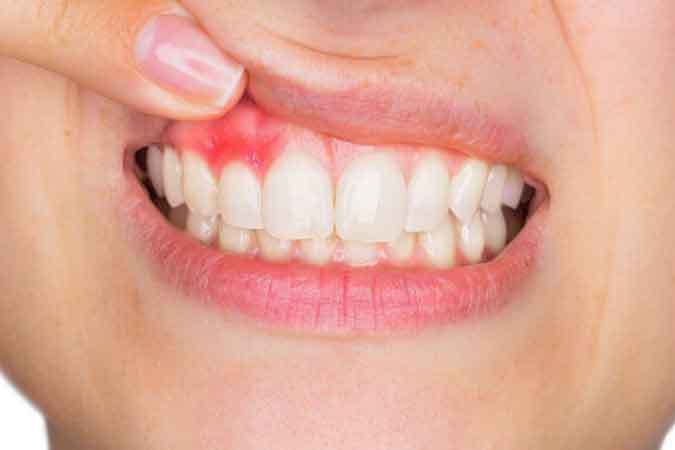
Healthy gums don’t bleed. If yours do — even just “a little when I floss” — your body is telling you something. Most of the time it’s gingivitis, which is completely reversible. Sometimes it’s more serious. Here are the 5 real causes and what to do.
Cause 1: Gingivitis (90% of Cases)
Plaque has accumulated along the gumline. Bacteria release toxins that inflame the gum tissue. When you brush or floss, inflamed gums bleed.
What it looks like: Red or puffy gums, especially at the gumline. Bleeding when brushing or flossing. Mild bad breath. No pain.
Fix: Professional cleaning + improved home care. Reversible in 2-4 weeks.
Cause 2: Brushing Too Hard or Wrong Technique
Aggressive brushing with hard bristles or back-and-forth scrubbing damages gum tissue mechanically.
What it looks like: Bleeding at specific spots where you brush hardest. Possible gum recession over time.
Fix: Switch to soft-bristle toothbrush (or electric). Brush in gentle circular motions, 45° angle to gumline. Let the brush do the work.
Cause 3: Just Started Flossing (After Not Flossing)
If you flossed last month and just started again, gums will bleed for 2-7 days as inflammation resolves. This is healing, not damage.
Fix: Keep flossing daily. Bleeding stops within 1-2 weeks if technique is correct.
Cause 4: Periodontal Disease (Below the Gumline)
Stage 2+ gum disease has tartar below the gumline that brushing can’t reach. Gums bleed even without obvious irritation.
What it looks like: Persistent bleeding despite good home care. Gum recession. Pockets between teeth and gums. Possible tooth mobility.
Fix: Professional deep cleaning (scaling and root planing). $750-1,200. Often covered by insurance.
Cause 5: Systemic Causes (Less Common)
- Medications — blood thinners (warfarin, Eliquis), aspirin daily, some chemotherapies
- Pregnancy — hormonal changes cause “pregnancy gingivitis” in 60%+ of pregnant women
- Vitamin deficiency — severe vitamin C deficiency (rare in modern diet) causes scurvy gum bleeding
- Leukemia or bleeding disorders — rare; usually presents with other symptoms (bruising, fatigue, anemia)
- Diabetes — uncontrolled diabetes worsens gum inflammation
What to Do This Week If Your Gums Bleed
- Brush twice daily with soft-bristle (or electric) toothbrush. 2 full minutes each time.
- Floss every night, even if it bleeds at first. Gentle saw motion, not snapping into gums.
- Use antimicrobial mouthwash for 30 seconds after brushing — chlorhexidine 0.12% prescription for 2 weeks, then Crest Pro-Health for maintenance.
- Drink more water — dry mouth worsens gum bleeding.
- Quit smoking if applicable — even temporarily reduces bleeding meaningfully.
When to Call the Dentist (Don’t Wait)
- Bleeding persists 14+ days despite improved home care
- Gums are deep red, purple, or have white spots
- Loose teeth or noticeable shifting
- Pus discharge from gums
- Severe pain or swelling
- Bleeding without provocation (spontaneous bleeding)
- You’re on blood thinners and bleeding is heavier than usual
FAQ — Bleeding Gums
Is bleeding gums normal?
No. Healthy gums don’t bleed during brushing or flossing. Bleeding indicates inflammation. It’s common — 47% of adults have some — but not normal.
If I just floss harder, will the bleeding stop?
Counterintuitive but yes — gentle daily flossing causes bleeding to stop within 1-2 weeks. Avoiding flossing makes it worse over time.
Can stress cause bleeding gums?
Indirectly. Stress weakens immune response, allowing gum bacteria to multiply. Many patients have gum flare-ups during major life stress.
Are bleeding gums dangerous during pregnancy?
Untreated pregnancy gingivitis is linked to premature birth and low birth weight. Continue dental cleanings during pregnancy. Tell your dentist you’re pregnant.
Can vitamin C help bleeding gums?
If you’re deficient, yes — scurvy is real. For typical gingivitis without deficiency, vitamin C alone won’t reverse it. Treat the underlying cause (plaque).
Will mouthwash alone fix bleeding gums?
No. Mouthwash supports brushing and flossing but doesn’t replace them. Mechanical plaque removal is required.
{“@context”:”https://schema.org”,”@type”:”FAQPage”,”mainEntity”:[{“@type”:”Question”,”name”:”Why do my gums bleed when I brush?”,”acceptedAnswer”:{“@type”:”Answer”,”text”:”Most likely gingivitis — plaque buildup at the gumline causing inflammation. 90% of cases. Other causes: brushing too hard, just starting to floss after a break, periodontal disease, certain medications (blood thinners), pregnancy hormones, or systemic conditions.”}},{“@type”:”Question”,”name”:”How long until bleeding gums heal?”,”acceptedAnswer”:{“@type”:”Answer”,”text”:”Stage 1 gingivitis: 2-4 weeks with improved home care + professional cleaning. Periodontitis: months with professional deep cleaning + maintenance.”}}]}
← Gum Disease Treatment Brooklyn hub | Call (718) 368-3368 — gum evaluation