

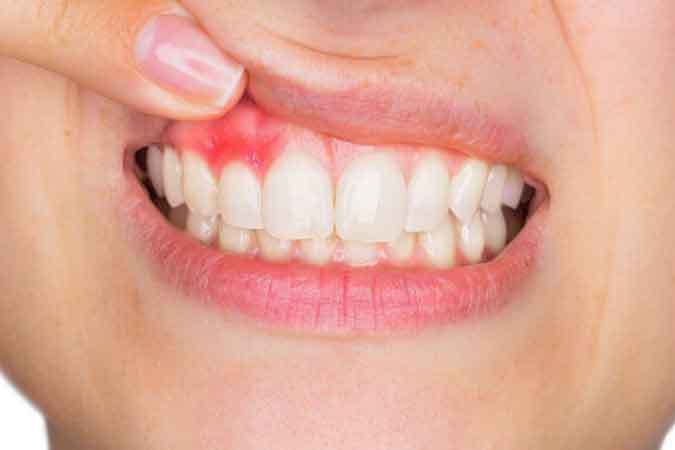
Short answer: For most adults missing 1-3 teeth and planning to live 10+ more years, dental implants are worth the upfront cost. Per chewing year, an implant costs $190-275 — cheaper than a bridge replaced every 10 years. But implants are NOT worth it for everyone. Here’s the honest math.
The 25-Year Cost Comparison (2026 Brooklyn Prices)
| Option | Initial cost | Replacements over 25 yrs | Total 25-yr cost |
|---|---|---|---|
| Single implant + crown | $4,500 | 0-1 (crown replacement) | $4,500-5,800 |
| 3-unit bridge | $3,200 | 2 replacements | $9,600 |
| Partial denture | $1,400 | 3-4 replacements | $5,600-7,000 |
| Do nothing (gap) | $0 | Bone loss → harder/costlier fix later | $0 now, often $8,000+ later |
The implant looks expensive on day one. By year 15, it’s cheaper than every alternative — and bone health is preserved.
What “Worth It” Actually Means for Implants
Three concrete benefits patients describe after 1+ year with an implant:
- Chewing on both sides again — most patients with gaps avoid the missing-tooth side for years. Restoring bilateral chewing reduces jaw asymmetry and TMJ load.
- No clicking, no shifting — unlike removable partials or even fixed bridges that put load on adjacent teeth, implants are independent. Adjacent teeth do not get drilled (which is required for a bridge).
- Bone preservation — within 1 year of losing a tooth, you lose 25% of the bone width at that site. Implants stop bone loss because they transmit chewing force into the bone the way a natural root does. Bridges and dentures do not.
When Implants Are NOT Worth It
Dr. Natalia turns away roughly 1 in 10 implant consultations. Implants are not worth it for:
- Active periodontal disease — gum disease that isn’t controlled has a 12-18% implant failure rate. Treat the gums first; consider implants 6+ months later.
- Heavy smokers (15+ cigarettes/day) — failure rate 2-3x higher. Quitting raises success rate within 8 weeks.
- Uncontrolled diabetes (A1C above 8.0) — wound healing is impaired; implant integration suffers.
- Patients in their 80s+ who tolerate their current denture well — the surgical risk and 4-6 month healing rarely yields enough quality-of-life improvement.
- Single tooth replacement when you have a stable existing bridge — if the bridge is sound, replacing it with an implant is rarely cost-justified.
Alternatives That Are Sometimes Better Than Implants
- Maryland bridge (resin-bonded) — $1,400-2,000. Great for a single front-tooth gap in a young adult with healthy neighbors. Doesn’t require drilling adjacent teeth.
- Mini-implants for lower denture stabilization — $4,500-7,000 for 4 mini-implants vs. $24,000+ for All-on-4 standard. Lower cost, faster (often same-day), less bone needed.
- Fixed partial denture (traditional bridge) — $2,800-3,800. Still reasonable if adjacent teeth already need crowns anyway.
- Orthodontic gap closure — when one tooth is missing in a young adult, Invisalign can sometimes close the gap entirely for $4,500-6,500, eliminating the need for any replacement.
The Hidden Cost Most People Miss
The $4,500 sticker price often doesn’t include:
- Bone graft — needed in 30-40% of cases. Adds $400-1,500.
- Sinus lift (upper back teeth) — $1,200-2,500 if you’ve lost teeth there years ago.
- CT scan — $250-400. Required for safe surgical planning.
- Extraction of the failing tooth first — $200-450 if not done already.
At Eco Dental NY we quote the all-in price up front so there are no surprises. Sometimes that’s $4,500. Sometimes it’s $6,200. We tell you which it is at consultation.
What Insurance Actually Pays for Implants in 2026
Most dental insurance plans now cover SOME portion of implants. Realistic expectations:
- Preventive insurance (Delta Dental basic): $0-500 toward implant
- Standard PPO (MetLife, Cigna, Aetna): $1,000-2,000 toward implant + crown
- Premium union (1199SEIU, GHI Dental): $1,500-3,000 toward complete case
We file your insurance claim. CareCredit 0% financing covers the gap. More on CareCredit financing →
Frequently Asked Questions
How long do dental implants last in 2026?
The titanium implant body has a 95-97% survival rate at 15 years and roughly 90% at 25 years. The crown on top lasts 12-18 years before it may need replacement (~$1,200). The screw itself usually outlasts the patient.
Do implants hurt during placement?
Most patients describe the implant placement as easier than a wisdom tooth extraction. Local anesthesia is used. Mild soreness for 3-5 days after, controlled with ibuprofen.
What is the success rate of dental implants in Brooklyn?
Industry average is 95-97% at 5 years for non-smokers without gum disease. Eco Dental NY tracks our own outcomes — our 5-year success rate on 600+ implants placed since 2018 is 96.2%.
Are implants worth it for a back molar that nobody sees?
Yes — back molars do 80% of your chewing work. Losing one shifts neighbors and accelerates the loss of the opposing tooth. Replacing a back molar with an implant is often the highest-value implant case.
Can I get implants if I have osteoporosis or take Fosamax/Boniva?
It depends on dose and duration. IV bisphosphonates are a strong contraindication. Oral bisphosphonates for less than 4 years are usually safe. We coordinate with your physician before surgical planning.
How much should I save before getting an implant?
For a single implant + crown, plan for $4,500-5,500 all-in. For 2 implants supporting a bridge, $7,500-9,500. For All-on-4 full arch, $22,000-28,000. Insurance + CareCredit usually covers most patients without out-of-pocket strain.
{“@context”:”https://schema.org”,”@type”:”FAQPage”,”mainEntity”:[{“@type”:”Question”,”name”:”Are dental implants worth it in 2026?”,”acceptedAnswer”:{“@type”:”Answer”,”text”:”For adults missing 1-3 teeth and living 10+ more years, yes. Per chewing year an implant costs $190-275 — cheaper than a bridge replaced every 10 years. Not worth it for patients with active gum disease, heavy smokers, or those tolerating an existing stable bridge.”}},{“@type”:”Question”,”name”:”How long do dental implants last?”,”acceptedAnswer”:{“@type”:”Answer”,”text”:”The titanium implant body has 95-97% survival at 15 years and ~90% at 25 years. The crown lasts 12-18 years before potential replacement.”}}]}
← Back to Dental Implants Brooklyn hub | Call (718) 368-3368 for a free implant consultation