

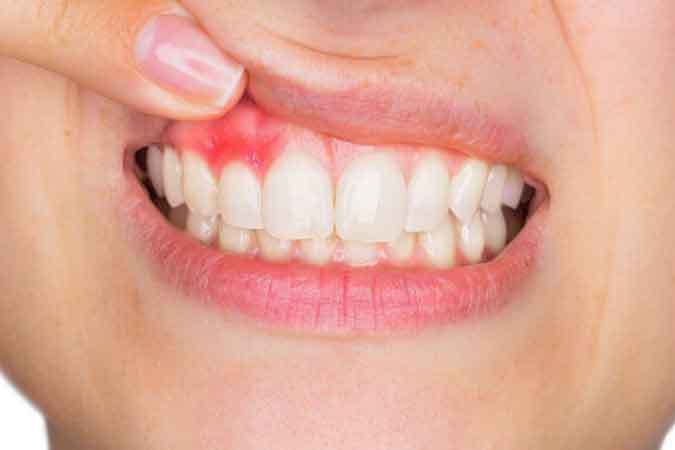
About 36% of US adults live with dental anxiety, and roughly 12% experience a severe phobia that keeps them out of the chair for years. If that sounds like you, this is not a character flaw — it is a documented psychological response that modern dentistry has very specific ways to address. This guide explains where dental anxiety comes from, what has changed clinically, the four levels of sedation we offer in Brooklyn, and a calm five-step path back to care.
How common dental anxiety actually is
The 36% figure comes from peer-reviewed dental research and is echoed by the Cleveland Clinic’s overview of dental phobia: about one in three American adults reports moderate dental anxiety — they delay appointments, dread visits for days, or push through cleanings while gripping the chair. Another 12% report severe dental anxiety or phobia strong enough that they avoid care altogether for five, ten, or fifteen years. The American Dental Association’s patient guidance on dental fear emphasizes the same point: this is common, and avoiding the dentist is the worst long-term outcome it produces.
Rates are not evenly distributed. Trauma survivors, immigrants who grew up under harsher dental systems (particularly former Soviet states, where local anesthesia was rationed), adults with PTSD, and adults on the autism spectrum with sensory sensitivities all report higher rates.
We say this clearly to every anxious patient who walks into our Sheepshead Bay practice: you are not alone, and you are not weak. Your nervous system learned, somewhere along the way, that the dental chair is dangerous. The job of a good dentist is to help your nervous system learn something different.
Where dental anxiety comes from (six root causes)
In our experience treating anxious adults at our Sheepshead Bay dental practice since 2018, dental anxiety almost always traces back to one or more of six root causes. Naming the cause matters, because the right response depends on which one is driving the fear.
1. Past trauma
The most common root cause is a specific bad experience — a painful procedure done without enough anesthesia, a dentist who continued drilling despite a raised hand, or being shamed as a child for crying. Dr. Natalia Blazhkevich sees this pattern weekly with patients who grew up in the Soviet Union or the post-Soviet 1990s, when dental care was often delivered without sufficient local anesthetic. The body remembers — a drill sound forty years later can trigger the same shallow breathing and urge to bolt.
2. Loss of control and restraint
Dental work requires lying back, mouth open, with another person’s hands inside one of the most sensitive parts of your body. You cannot easily speak or swallow. For some people, this physical configuration alone triggers a fight-or-flight response — especially common in survivors of physical assault and in veterans with combat-related PTSD.
3. Embarrassment and shame
Many adults who have avoided dental care for years carry intense shame about the current state of their mouth. They imagine the dentist’s reaction, the look of judgment, the lecture. So they keep avoiding, and the longer they avoid, the worse the imagined judgment becomes. This shame loop is one of the most common reasons adults go a decade between visits even when they have insurance.
4. Sensory overload
Dental offices are sensory-intense — high-pitched drill sounds, low-frequency vibrations through the jaw, distinct smells (eugenol, methacrylate), bright overhead lights, and the closeness of a masked face six inches from your own. For adults with sensory processing differences or autism-spectrum profiles, this combination can be overwhelming before any procedure begins.
5. Hypersensitive gag reflex
A subset of patients have a genuinely hypersensitive gag reflex, often inherited, that turns routine X-rays, suction, and impressions into a real physiological problem. Their gag threshold is biologically lower. We accommodate this with panoramic imaging, smaller digital sensors, distraction techniques, and a small dose of nitrous when needed.
6. Co-occurring anxiety and mood conditions
Generalized anxiety disorder, panic disorder, PTSD, and depression all amplify dental fear. When a patient already lives with a baseline of heightened nervous-system activation, the dental chair adds onto that load rather than starting from zero. Coordinating with a therapist or psychiatrist (with permission) is often the difference between successful care and another decade of avoidance.
What modern dentistry has changed
If your last dental visit was in 1995, 2005, or even 2015, the experience available in a well-equipped Brooklyn practice in 2026 is genuinely different.
- Topical anesthetic before any injection. A gel numbs the gum for one to two minutes before the needle. The injection becomes pressure, not sharpness.
- Computer-controlled anesthetic delivery (e.g. the Wand) eliminates the burning sensation patients remember from older syringe injections.
- Modern handpieces are quieter and produce less vibration. Electric handpieces run with a smooth hum rather than a shrill whine.
- Digital X-rays use a fraction of the radiation of film. Panoramic X-rays require nothing inside the mouth at all.
- Tell-show-do communication. Every instrument is named and shown before it touches you.
- Stop signals. A raised hand pauses the procedure — no questions. Non-negotiable.
- Multiple sedation tiers matched to your comfort.
None of this erases past trauma on its own. But it means the experience you are bracing for may not be the experience you get.
The four levels of sedation we offer
Sedation is a tool, not a sales pitch. Most of our anxious patients eventually do routine cleanings with no sedation at all. But for the first one, two, or three visits, the right level can be the difference between “I came back” and “I never came back.” More detail lives on our sedation dentistry in Brooklyn page.
| Level | What it is | You feel | Driver needed? | Cost |
|---|---|---|---|---|
| None | Topical numbing only, with stop signals | Fully awake and aware | No | $0 (included) |
| Nitrous oxide | “Laughing gas” via a small nose mask | Calm, warm, slightly floaty; effects gone in 5 minutes | No — you drive yourself | $185 per visit |
| Oral conscious sedation | Halcion (triazolam) pill 1 hour before | Deeply relaxed, often little memory of the procedure | Yes — bring a driver | $295 per visit |
| IV sedation | Referred to a board-certified dental anesthesiologist | Twilight sleep; minimal awareness | Yes | Referral pricing |
For roughly 80% of our anxious patients, nitrous oxide at $185 is the right starting point. It works within two minutes, wears off within five minutes, and lets you drive yourself. You stay in the conversation, you can still raise your hand, and you can still tell us if something hurts.
Oral conscious sedation at $295 is appropriate for longer procedures or for patients whose anxiety is severe enough that nitrous alone is not enough. A responsible adult must drive you home, and many patients have only fragmented memory of the visit. For complex cases requiring deep IV sedation, we refer to a partner anesthesiologist — a safety standard, not a limitation.
The five-step path back to care if you have avoided for years
If it has been five, ten, or fifteen years since your last cleaning, here is the specific, low-pressure path we use with new anxious patients. None of these steps require you to commit to anything beyond the step you are on.
Step 1 — Email or use our contact form first, not the phone
Phone calls feel high-pressure. Skip it. Use our online contact form or email ecodentalny@gmail.com. Write something like, “Hi, I have severe dental anxiety. I have not seen a dentist in [X] years. Can we start with a no-procedure meet-and-greet?” We answer the same business day, in writing, in whichever language is easiest for you.
Step 2 — Schedule a free meet-and-greet (no procedure)
This is a 15 to 30 minute visit where nothing clinical happens. You meet Dr. Natalia, see the operatory, sit in the chair if you want to (or you do not), and ask any question you want. We do not look in your mouth unless you ask us to. No cost. No obligation. Many patients tell us this single visit lowered their anxiety more than years of trying to talk themselves into a “real” appointment.
Step 3 — A limited-scope first clinical visit
When you are ready, the first clinical visit is deliberately small: a limited exam, maybe one or two digital X-rays if you can tolerate them (panoramic if you cannot), and either a gentle preliminary cleaning or just a conversation about what we found. We do not present you with a $14,000 treatment plan at the end. You set the pace.
Step 4 — Add sedation for the next visit if step 3 was hard
If the first clinical visit pushed close to your edge, we plan nitrous for the next one and break treatment into the smallest reasonable chunks. A patient who needs eight fillings gets two per visit, spread out, with nitrous for the first few until comfort returns.
Step 5 — Build toward a routine
For the first year, many previously-avoidant patients come every three months for a quick check-in cleaning. The shorter interval keeps the chair from becoming a strange place again. Most patients reach a normal six-month cleaning and hygiene schedule within two to four visits.
Our covenant with anxious patients (seven promises)
Dr. Natalia Blazhkevich has built much of our practice around adults who were ready to give up on dentistry. These are not marketing language — they are operational standards every visit follows.
- We will never lecture you about how long it has been. Five years, fifteen years, never — it does not change how we greet you, examine you, or recommend treatment.
- We will never show photographs of your mouth to anyone without your written permission. Clinical photos stay in your chart. They do not go online unless you specifically opt in.
- A raised hand pauses everything. Immediately. No questions, no exceptions. You can pause to swallow, breathe, ask a question, cry, or for no reason at all.
- We will explain every instrument before it touches you. Mirror, explorer, suction, polisher, drill if needed — each one named, each one shown.
- We will tell you the truth about how long something will take. If it is a 40-minute filling, we say 40 minutes. We do not lie to keep you in the chair.
- We will not upsell during your visit. Treatment planning is a separate, calm conversation — not a pressured pitch while you are still numb.
- We speak 5 languages. English, Russian, Polish, Ukrainian, and Uzbek are all spoken fluently in-house. Language is never a barrier that adds to anxiety.
One more standing offer: if at any point during any visit you decide you want to stop and leave, you can. No charge, no pressure, and we will welcome you back whenever you are ready.
Four anxiety scenarios we work with every week
Names changed, details composited from actual patients. These illustrate how the path back to care plays out in real life.
Scenario 1 — Sarah, 34, no dentist since 2018
Sarah moved to Brooklyn during the pandemic and never re-established care. She was certain she had “horrible” teeth and was terrified of being judged. She emailed us with a long apologetic message. Same day, we scheduled a free meet-and-greet. Two weeks later she did a first cleaning with nitrous. The exam found three small fillings and one crown — significantly less than she had feared. We spread the work across six visits over eight months. She is now on a six-month routine.
Scenario 2 — Yuri, 51, Soviet-era dental trauma
Yuri immigrated from Ukraine and had not seen a dentist in decades — fillings done in childhood without anesthesia had left him with a body memory he could not override. Dr. Natalia spoke with him in Russian for forty minutes at the meet-and-greet, with no instruments in sight. He chose to do his first cleaning without sedation, with Dr. Natalia narrating every step in Russian. He is now a routine patient and referred his wife six months later.
Scenario 3 — Marina, 29, severe gag reflex
Marina could not tolerate intraoral X-rays at previous dentists and had been told she was “being dramatic.” Her gag reflex is real and measurable. We started with a panoramic X-ray, then used nitrous oxide for the first round of small intraoral images, then transitioned to a smaller-form sensor and distraction breathing techniques. She now tolerates routine bitewings with brief nitrous.
Scenario 4 — Edward, 62, combat-related PTSD with restraint trigger
Edward’s anxiety was rooted in a feeling of being immobilized that lying flat in the dental chair recreated. With his permission, we coordinated with his VA therapist. We modified positioning to a semi-upright chair angle, added nitrous for the first three visits, and walked through the procedure plan beforehand. He completed a full restorative plan over five months.
When dental anxiety crosses into a medical issue
For most adults, dental anxiety can be addressed within a dental setting. For a smaller group, it is part of a broader clinical picture that benefits from coordinated care.
- If dental visits trigger regular panic attacks — full panic with hyperventilation or dissociation, not just dread — consider working with a therapist on the underlying response. Cognitive Behavioral Therapy is specifically effective for dental phobia.
- If you have avoided dental care for seven or more years, start with a meet-and-greet only. The shame loop gets heavier every year of avoidance, and the path back has to start somewhere small.
- If you already work with a therapist or psychiatrist, ask whether they would send us a brief note about your triggers. With your written permission, that coordination significantly improves outcomes.
- For severe needle phobia specifically, oral conscious sedation taken at home before the visit may be more useful than nitrous, because it works during the injection itself.
How insurance and cost factor in
Cost anxiety and procedure anxiety often stack. We address cost separately. Our 2026 Brooklyn dental insurance guide explains which of our 18 in-network PPO plans cover what, and our cash-pay cost guide publishes our self-pay pricing transparently. Nitrous is not typically covered; oral sedation is sometimes covered when medically documented; CareCredit financing is available for plans that need spreading out.
For anxious patients, after-work hours often help. Our late-hours availability in Sheepshead Bay goes to 7 pm Monday through Friday. If anything urgent is happening — pain, swelling, a broken tooth — please do not wait. Our emergency dental coverage in 11229 is available the same day, with the same anti-anxiety approach.
When to come to Eco Dental NY
You should come in when you are ready — not when this guide says so, but when your own internal weather shifts even a little. For most readers, the first step is not a cleaning — it is a five-minute email to our contact form describing what scares you most. Dr. Natalia Blazhkevich personally reviews messages flagged as anxious, and our team has been doing this respectful re-entry work with adults since 2018. The free meet-and-greet means your first visit costs nothing and commits you to nothing.
Every patient on our schedule today was, at some point, a new patient walking in for the first time. Many were terrified. None remember that fear with shame — they remember the visit they finally made.
Frequently Asked Questions
Is nitrous oxide safe — what does it actually feel like?
Nitrous oxide has been used safely in dentistry for over 150 years and is one of the most reversible sedatives in medicine. Through a small nose mask, you breathe a mix of nitrous and oxygen for two to three minutes. Most patients describe a warm, slightly floaty, “less worried” feeling — fully aware, fully able to talk, just with the volume turned down on the anxiety. When the mask comes off, you breathe pure oxygen for five minutes and the effects clear completely. You drive yourself home with no after-effects.
Will you make me feel guilty if I haven’t been to a dentist in years?
No. This is the first promise in our practice covenant and it is non-negotiable. Whether it has been three years, fifteen years, or your entire adult life, we treat you the same way we treat anyone else on our schedule. There is no lecture, no sighing, no “well, if you had come in earlier” conversation.
Can I bring a support person to my appointment?
Yes, absolutely. A spouse, partner, parent, adult child, or close friend can sit in the operatory with you for the entire visit. Many anxious patients find that having a familiar face within sight is the single biggest comfort intervention available. There is no extra cost — just tell us when you book.
How much does sedation cost at your practice?
Nitrous oxide is $185 added to whatever procedure you are having. Oral conscious sedation (Halcion) is $295 added per visit. Both prices are flat, transparent, and not marked up beyond standard Brooklyn rates. IV sedation, when needed, is referred to a board-certified dental anesthesiologist and we will quote you in advance.
Does insurance cover sedation for dental anxiety?
Most PPO dental plans do not cover nitrous oxide for adult patients with anxiety as the sole indication. Oral sedation is sometimes covered when there is documented medical necessity, and a few plans cover sedation for specific procedures. We verify your benefits before your visit and tell you exactly what is and is not covered. CareCredit can spread sedation costs over interest-free or low-interest payment plans for qualifying balances.
Can I take my own anxiety medication before a visit?
Often yes, but please tell us first. If you have a prescription for a benzodiazepine like Ativan or Xanax from your physician, taking your normal pre-procedure dose is usually compatible with our care — but we need to know in advance because it changes the sedation we offer and the recovery plan. SSRIs, antidepressants, and beta blockers do not require any change to your routine.
What happens if I have a panic attack during a procedure?
The procedure stops. Immediately. The instruments come out of your mouth, the chair is brought upright, and we walk you through grounding (slow breathing, sensory anchors, sometimes nitrous oxide to short-circuit the panic). We do not resume until you say to resume, or until you decide to reschedule. A panic attack mid-visit does not embarrass us, frustrate us, or change how we treat you going forward.
Is dental anxiety considered a medical necessity for sedation?
Sometimes — particularly when documented by a physician, psychiatrist, or therapist, and especially when combined with a diagnosed anxiety disorder or PTSD. For patients with a formal anxiety diagnosis who want oral conscious sedation, we can submit a pre-authorization request and provide the clinical documentation needed. We make no promises about coverage, but we do the paperwork so you do not have to fight your insurer alone.
Book a Free Meet-and-Greet at Eco Dental NY
If you have been avoiding the dentist, your first visit can be a 15 to 30 minute conversation — no procedures, no exam, no X-rays, no pressure, no cost. Dr. Natalia Blazhkevich, DDS — sole provider, 5 languages spoken (English, Russian, Polish, Ukrainian, Uzbek). 2384 Ocean Avenue, STE 1, Brooklyn, NY 11229. Email ecodentalny@gmail.com, request an appointment online, or — when you are ready — call (718) 368-3368. Mon–Fri 9 am – 7 pm.